English
 Spanish
 Arabic

Home / News / Industry news
Share
CNC spindle performance depends on much more than the nominal bearing size. A bearing arrangement that works well in a low-speed machining center may generate excessive heat or insufficient stiffness in a high-speed spindle. Buyers therefore need to evaluate speed, cutting load, accuracy, lubrication, mounting space and thermal behavior together. Based on its experience supplying industrial and precision bearing solutions, FONKIN Bearing recommends treating the spindle, bearings, lubrication and mounting conditions as one complete system.
This guide explains the main selection points for spindle bearing replacement and new machine projects. Final selection should always be checked against the machine builder's drawing, operating conditions and the bearing manufacturer's technical data.
Before comparing part numbers, collect the application data. The most useful information includes maximum and normal operating speed, radial and axial loads, spindle orientation, tool type, duty cycle, lubrication method, cooling arrangement and target runout.
For replacement projects, also record the complete marking from every bearing, including suffixes. Two bearings with the same basic number may have different precision grades, contact angles, cage materials or preload classes. Replacing a matched set with individually packed standard bearings can change spindle stiffness and operating temperature.
Precision angular contact ball bearings are widely used in CNC spindles because they can support combined radial and axial loads at high speed. The contact angle influences the balance between axial rigidity and speed capability. A smaller contact angle generally favors speed, while a larger angle normally provides higher axial load capacity.
Cylindrical roller bearings may be added where high radial stiffness is required. In some spindle designs, a roller bearing supports radial load while angular contact bearings locate the shaft axially. The correct combination depends on the original spindle design and should not be changed without engineering verification.
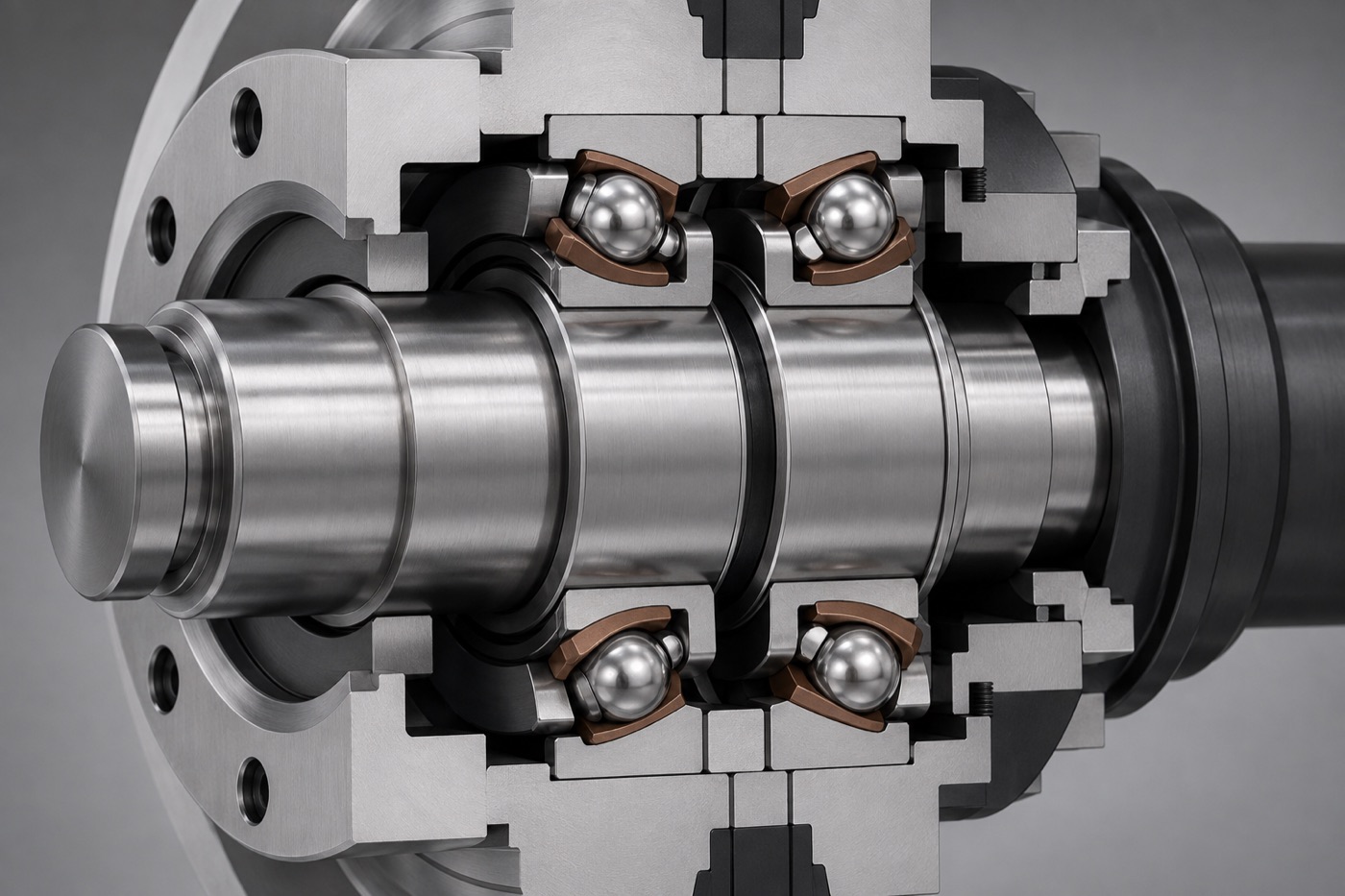
High-precision bearings are commonly specified to classes such as P4 or equivalent manufacturer grades. However, bearing accuracy alone cannot guarantee spindle accuracy. Shaft and housing tolerances, shoulder squareness, clamping force, cleanliness and assembly practice all affect runout.
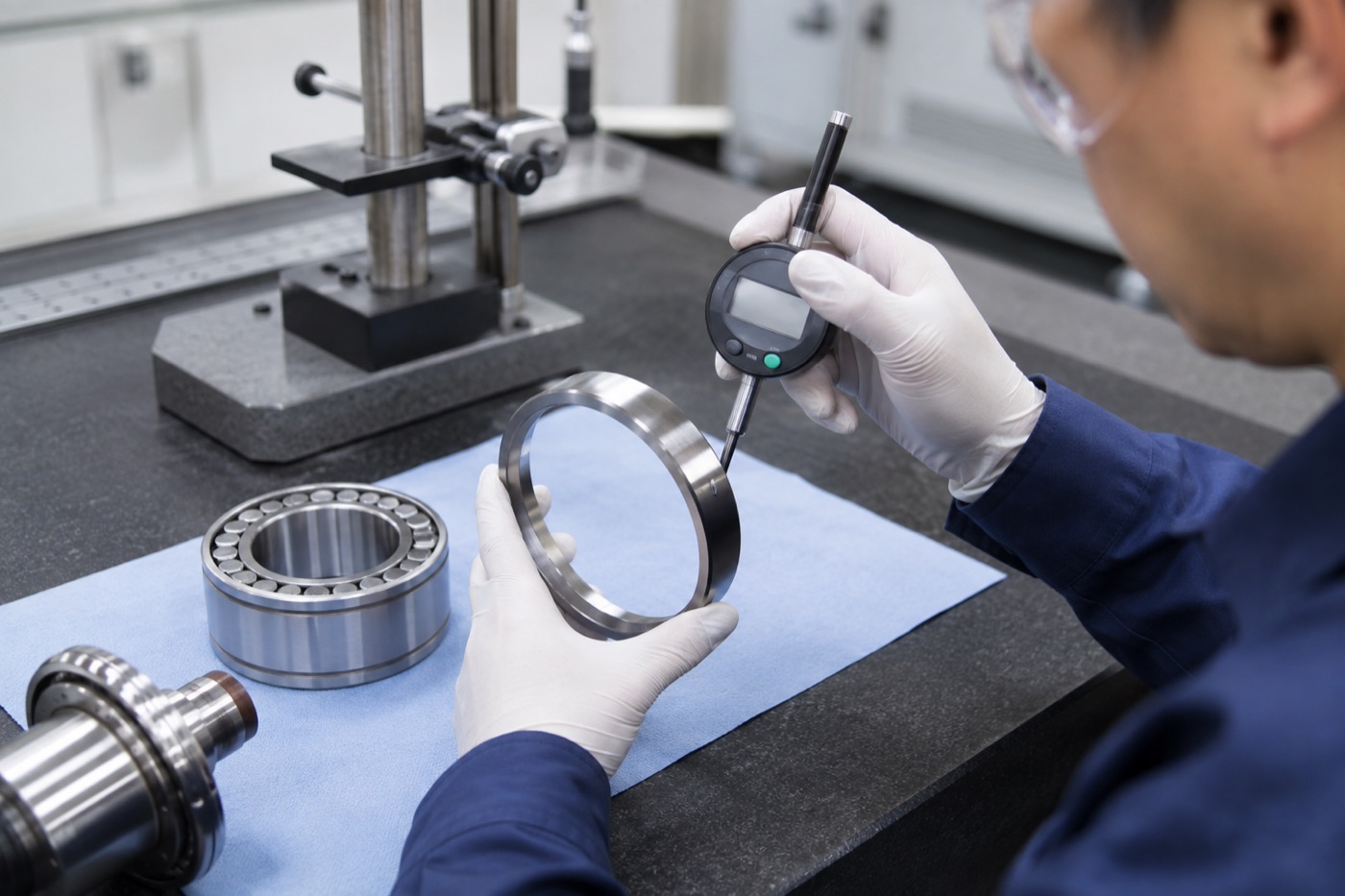
Buyers should confirm both dimensional accuracy and running accuracy. For a replacement order, the safest approach is to provide the original designation, machine model and photographs of the markings. When an equivalent brand is considered, compare the full technical specification rather than relying only on bore, outside diameter and width.
Preload removes internal clearance and improves rigidity, but excessive preload can increase friction and temperature. Insufficient preload may reduce stiffness and allow vibration. Light, medium and heavy preload designations are not automatically interchangeable across manufacturers.
Common arrangements include back-to-back, face-to-face and tandem sets. Back-to-back arrangements provide a wide effective spread and good moment rigidity. Face-to-face arrangements can accommodate some misalignment but usually offer lower moment stiffness. Tandem arrangements increase axial load capacity in one direction and are often combined with an opposing bearing or set.
Matched bearings should remain in their specified sequence and mounting direction. Packaging marks and reference arrows must be checked before installation.
Catalog speed limits depend on bearing design, preload, cage, lubrication, cooling and installation quality. Grease lubrication is simple and widely used, but the grease type and fill quantity are critical. Too much grease can produce rapid temperature rise during run-in. Oil-air lubrication is often selected for higher-speed applications because it can deliver a controlled lubricant quantity and assist heat management.
Do not select a bearing solely from a maximum catalog speed. Calculate the real operating requirement and leave an appropriate engineering margin. Monitor temperature and vibration during commissioning, following the machine builder's run-in procedure.
Small particles can damage raceways and reduce spindle life. Bearings should remain sealed in their original packaging until installation. Work surfaces, tools, shafts, housings and adjacent components must be clean. Force should never be transmitted through the rolling elements when mounting a ring.
Heating methods, fitting force and locknut torque must be controlled. After assembly, verify rotational smoothness, axial position, runout, temperature trend and vibration before full-speed operation.
For a faster and more accurate quotation, send the complete bearing number and suffixes, machine brand and spindle model, required quantity, maximum operating speed, lubrication method, existing arrangement or assembly drawing, destination country and required delivery date. Also state whether you prefer the original brand, an equivalent option or both.
FONKIN Bearing can review bearing lists for industrial and machine-tool applications and help compare available specifications across selected brands. Compatibility must be confirmed from complete technical data before purchase.
The best CNC spindle bearing is not simply the bearing with the highest precision label or speed rating. A reliable selection balances accuracy, preload, arrangement, lubrication, stiffness and thermal behavior. Providing complete application information helps reduce quotation errors and avoid costly spindle downtime.
Send your spindle bearing list, original markings or drawing to FONKIN Bearing for a specification review and quotation.

+86-137-7105-7666
+86-510-6831-3099