English
 Spanish
 Arabic

Home / News / Industry news
Share
2026’s global geopolitical map has been redrawn by escalating military tensions between the U.S., Israel and Iran. For the global bearing industry—the uncelebrated "joints" powering every tank, jet, factory line and wind turbine on the planet—this isn’t just background noise: it’s a seismic shift rewriting the rules of survival and growth. From skyrocketing logistics costs to an unprecedented boom in military-grade precision demand, manufacturers including TIMKEN and fonkin BEARING are rewriting their strategic playbooks to not just endure, but outperform.
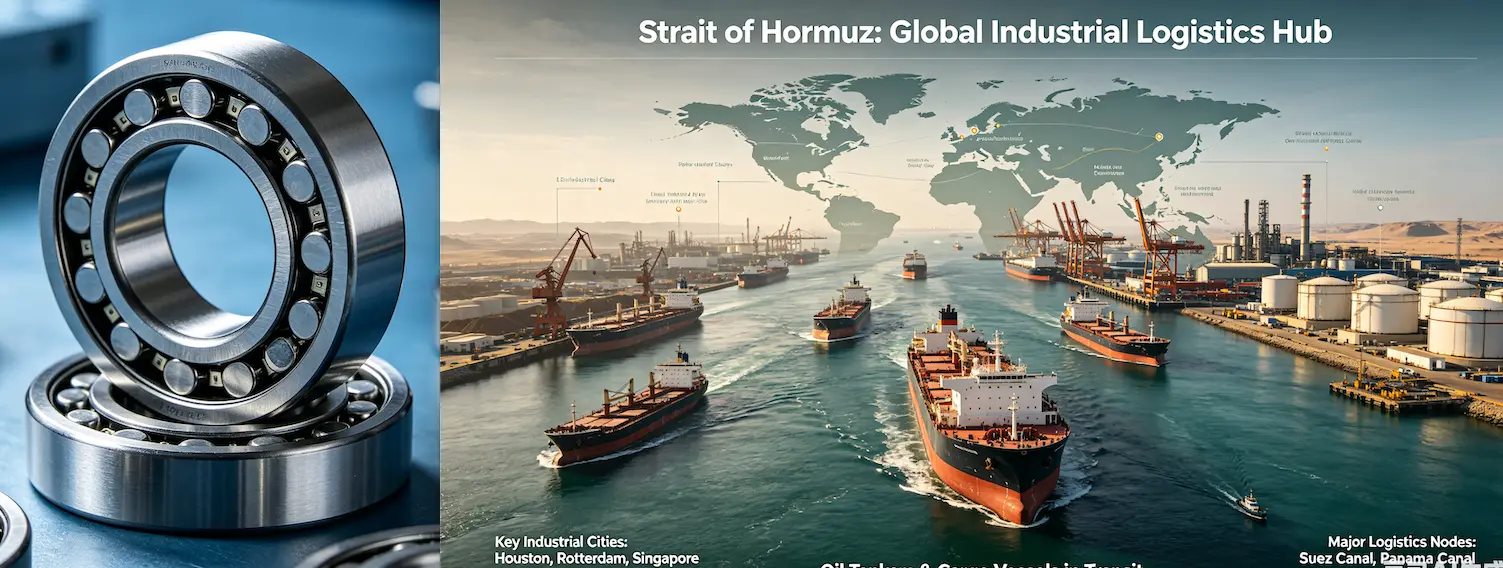
The Strait of Hormuz—lifeline for 20% of the world’s oil, and the high-carbon steel and specialty alloys that form the backbone of bearing manufacturing—has been choked by the escalating Middle East conflict. What started as minor shipping delays has exploded into a full-blown cost crisis for the sector:
Logistics Gridlock: Vessel traffic through the chokepoint has collapsed, sending marine insurance premiums doubling overnight.
Raw Material Shock: Stranded cargoes have left production lines starved of critical inputs, sending prices for bearing-grade steel and high-performance alloys spiking.
Margin Collapse: H1 2026 industry data shows global bearing production costs have jumped 15–20% on average, squeezing margins for manufacturers across Europe and Asia.
In its Q1 2026 operational update, TIMKEN flagged unprecedented procurement cost pressure from disrupted Middle East logistics—a pain point rippling through every major manufacturing hub worldwide.
While traditional automotive and general machinery sectors face softening demand, the conflict has unlocked a red-hot high-end niche: the global defense economy, now the fastest-growing driver of precision bearing demand.
As nations ramp up defense spending, demand for bearings built to survive the unforgiving extremes of combat—blistering high temperatures, violent vibration, corrosive battlefield conditions—has hit a 10-year peak. These components are the unsung core of fighter jets, missile guidance systems, main battle tanks and long-range radar arrays. fonkin BEARING recently locked in major overseas defense contracts for its proprietary impact-resistant specialty bearings, engineered exclusively for the harshest combat environments.
Meanwhile, TIMKEN has reallocated production capacity to ramp up aerospace-grade precision bearings, answering skyrocketing demand for both military aircraft and reconnaissance drone manufacturing.
The conflict’s energy market chaos has had an unexpected side effect: supercharging the global shift to renewables, and with it, a new wave of structural demand for bearings:
Wind Power: Surging orders for heavy-duty yaw and pitch bearings, built to keep turbines spinning reliably in remote, harsh conditions.
Solar Tracking: Robust, long-life bearings for solar tracking systems, as countries race to diversify their energy grids away from volatile fossil fuels.
To defuse the ticking "Middle East risk" bomb, industry leaders are ditching outdated lean models for a resilient, regionalized production playbook:
Supply Chain Decentralization: TIMKEN is scaling up its Southeast Asian manufacturing footprint to bypass high-risk Middle Eastern shipping lanes.
Niche R&D Focus: fonkin BEARING is doubling down on customized R&D to lock in dominance of high-margin military and renewable energy markets.
Buffer Stock Overhaul: Manufacturers are shifting from "just-in-time" inventory to "just-in-case" stockpiles of critical specialty alloys, insulating production from future supply shocks.
For the global bearing industry, 2026’s geopolitical storm is more than a crisis—it’s a reset. The manufacturers that thrive won’t just be weathering the chaos: they’ll be steering their businesses into a more resilient, high-value future.

+86-137-7105-7666
+86-510-6831-3099