English
 Spanish
 Arabic

Home / News / Industry news
Share
As the core component of mechanical transmission systems, bearings directly affect equipment stability and service life. Professional disassembly and installation, scientific daily maintenance, and accurate regular replacement are key to ensuring long-term efficient operation of bearings. From an engineering practice perspective, the key operational points are detailed in the following sections by core links:
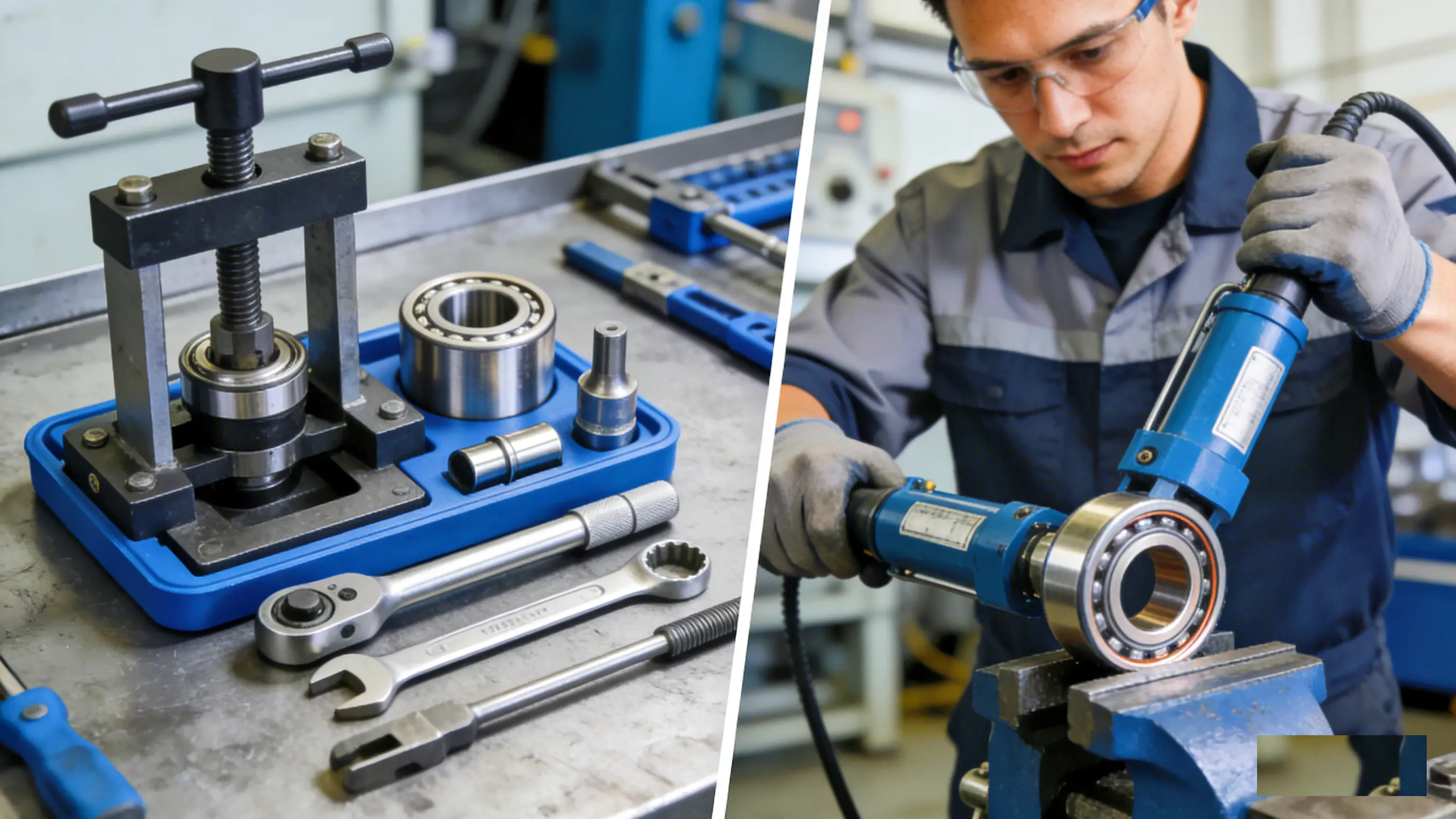
Disassembly must strictly adhere to the "non-destructive principle" to avoid damaging the bearing or mating components. Step 1: Shut down the power and wait for the equipment to cool down, then clean contaminants such as dust and oil around the bearing; Step 2: Mark the relative positions of the bearing with the shaft and bearing housing to provide a reference for alignment during reassembly; Step 3: Prioritize the use of special tools such as pullers and hydraulic separators. Never directly strike the outer ring, rolling elements or cage to prevent cracks or deformation; Step 4: For bearings with interference fit, induction heating (temperature controlled at 80-120℃, avoiding exceeding 120℃ to damage material performance) or sleeve cooling method can be adopted to reduce disassembly resistance and protect the precision of the mating surface.
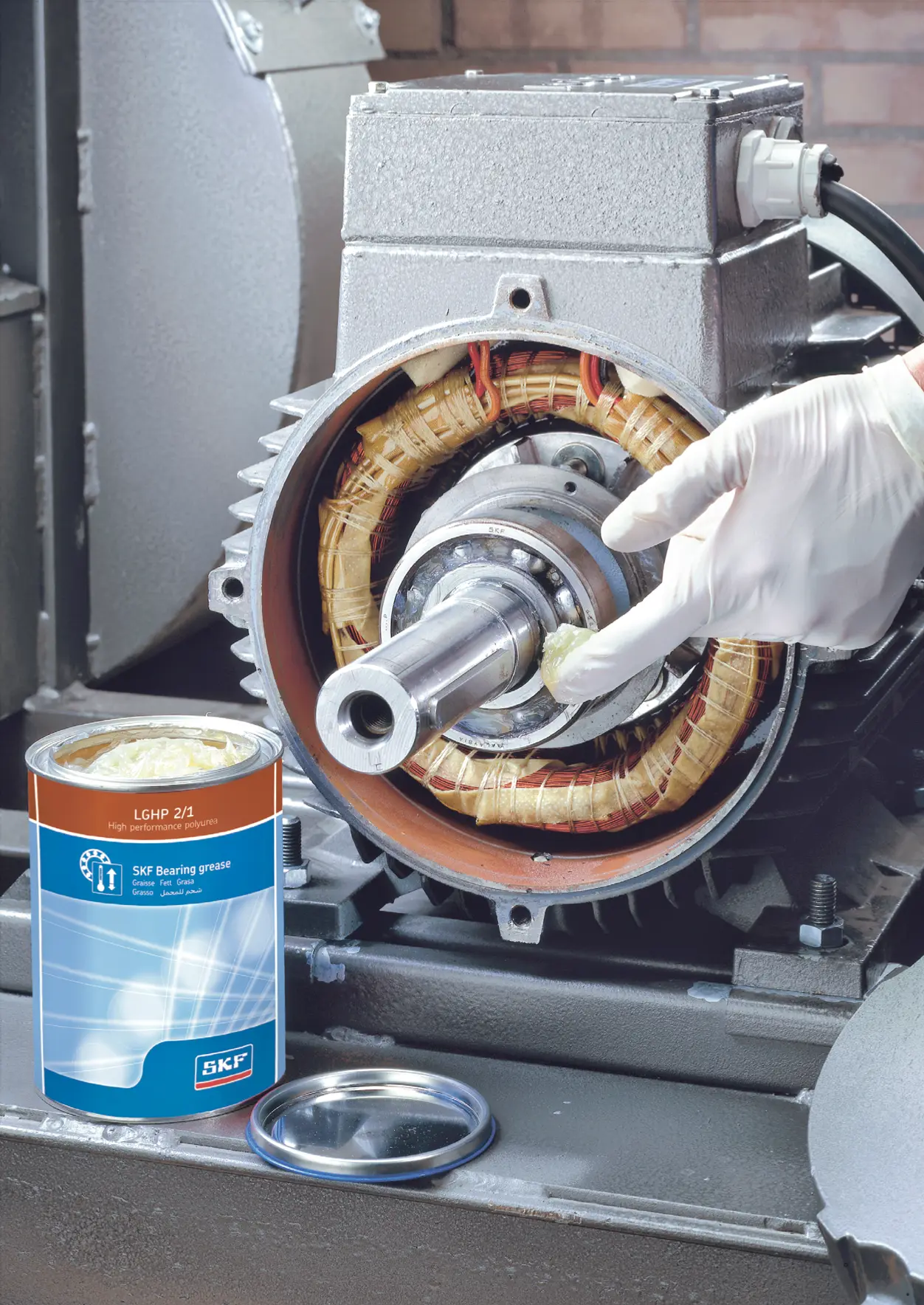
Installation quality directly determines bearing service life, and full-process details must be controlled. Step 1: Preprocessing: Check whether the tolerance and surface roughness of the shaft and bearing housing meet design standards, remove burrs, rust and oil stains, and perform grinding correction if necessary; Step 2: Assembly: During press-fitting, the pressure should act on the tightly fitted ring (press the inner ring if the inner ring fit is tight, and the outer ring if the outer ring fit is tight). For hot fitting, heat the bearing evenly to avoid local overheating; Step 3: Commissioning: After installation, test the axial clearance to ensure it is within the design allowable range, and apply an appropriate amount of grease (filling volume is 1/3-2/3 of the internal space of the bearing, avoiding excessive or insufficient amount affecting lubrication effect); Step 4: Trial operation: Start the equipment for no-load operation for 5-10 minutes, check temperature, vibration and abnormal noise, and put it into load operation only if there is no abnormality.
Daily maintenance focuses on "preventing minor issues from escalating" and establishing a regular inspection mechanism. First, temperature monitoring: During normal operation, the bearing temperature should not exceed 35℃ above the ambient temperature, with a maximum of 70℃. If the temperature rises sharply, shut down immediately for troubleshooting; Second, status observation: Pay attention to changes in vibration values and abnormal noises during daily inspections, and prevent dust and moisture intrusion in combination with the integrity of the sealing device; Third, lubrication management: Replenish or replace grease every 1-3 months according to working conditions, and shorten the cycle to within 1 month in harsh environments such as high temperature, heavy dust and humidity; Fourth, cleaning and maintenance: Regularly clean contaminants around the bearing end cover and seals to keep the heat dissipation channel unobstructed.
Bearing replacement must be based on operating data and actual working conditions to avoid "over-service" or "premature replacement". First, service life reference: The design life of general industrial bearings is 20000-80000 hours, and it needs to be adjusted according to actual operating data under heavy load and high-speed working conditions; Second, mandatory replacement conditions: Pitting corrosion, cracks or spalling on rolling elements or raceways; Clearance exceeding 1.5 times the upper design limit due to wear; Severe deterioration of grease that cannot be thoroughly cleaned; Persistently high bearing temperature (exceeding 70℃) with no solution found; Third, replacement requirements: Select bearings of the same model and precision grade, avoid mixing products of different specifications, and align according to the original marks during reassembly to ensure installation accuracy.
Scientific maintenance can extend bearing life by more than 30%, and targeted plans must be formulated. First, establish maintenance records: Document installation date, operating hours, maintenance frequency, fault conditions and other data to provide a basis for status evaluation; Second, customize maintenance plans: Shorten maintenance cycles for heavy-load and high-speed equipment according to equipment load, speed, ambient humidity and other working conditions, and strengthen sealing protection in harsh environments; Third, seal management: Regularly check the integrity of sealing rings and dust covers, and replace them in time if aging or damage occurs to block pollutant intrusion from the source; Fourth, spare parts management: Reserve bearings of the same specification and special tools As the core component of mechanical transmission systems, bearings directly affect equipment stability and service life. Professional disassembly and installation, scientific daily maintenance, and accurate regular replacement are key to ensuring long-term efficient operation of bearings. From an engineering practice perspective, the key operational points are detailed in the following sections by core links.

+86-137-7105-7666
+86-510-6831-3099